
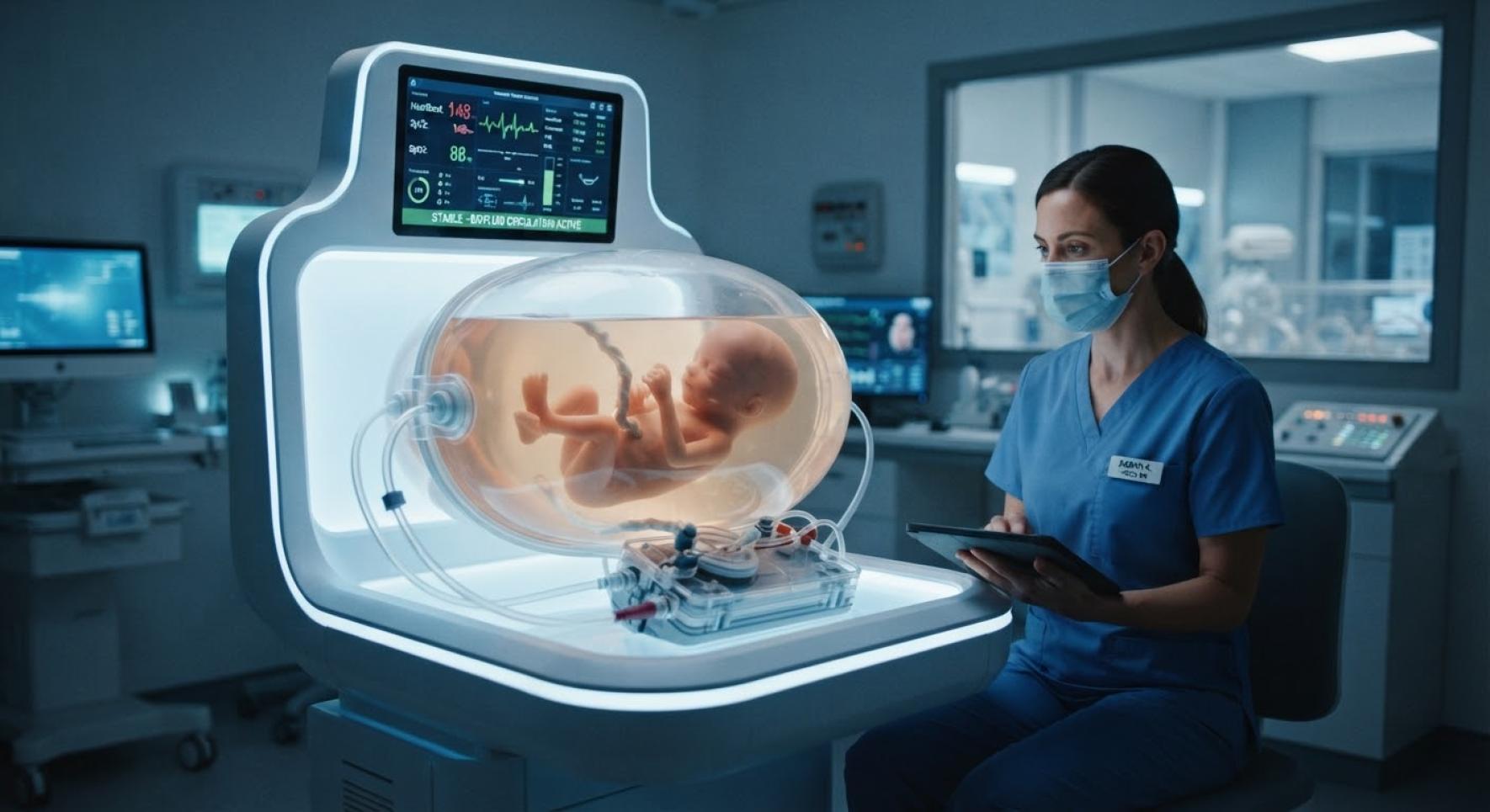
Artificial Womb Revolution
The Artificial Womb Revolution: The Future of NICU Care
KTI
As
you step into your third semester of maternal and neonatal nursing, you are
entering a field on the verge of a massive medical breakthrough. The
traditional image of a micro-preemie hooked up to aggressive mechanical
ventilators is rapidly changing. The most exciting frontier in neonatal care
today is the artificial womb—and it is completely redefining what survival
looks like for extremely premature infants.
What is an Artificial Womb?
An artificial womb (often referred to as a biobag system) is an advanced bioengineered device designed to replicate the exact environment of a mother\'s uterus. It consists of a sterile, transparent fluid-filled enclosure that simulates amniotic fluid. The primary goal of this technology is to allow infants born extremely prematurely to finish the final critical stages of development in a protective, womb-like environment outside the biological mother, rather than under harsh traditional NICU conditions.
For
decades, babies born before 24 weeks faced staggering hurdles because their
lungs and organs simply weren\'t ready for air and modern ventilators.
Artificial wombs bypass this entirely by mimicking a natural intrauterine
environment.
Why is this tech mind blowing?
- Fluid Breathing: Instead of breathing
air, the infant floats in a warm, sterile amniotic fluid substitute, allowing
their delicate lungs to keep growing naturally just as they would inside the
womb.
- No
Mechanical Pumps: Traditional life support uses pumps to push blood through circuits, which
can cause complications. Artificial systems rely purely on the baby’s own
heartbeat to circulate blood through the umbilical cord into a low-resistance
oxygenator.
- Seamless Transition: It bridges the dangerous gap between extreme prematurity and viability, drastically cutting down rates of chronic lung disease and brain injury.
Prepared
by : Sahan Fria Omer / Lab Assistant